Looking at a canal home in Punta Gorda Isles and wondering what seawall maintenance might cost you over time? You are smart to ask. In 33950, a seawall is as critical to your property as the roof, and the local canals expose it to saltwater, boat wakes, and storm surge. In this guide, you will learn what to inspect, typical lifespans by material, real‑world cost drivers, and a simple budgeting plan for repairs or full replacement. Let’s dive in.
Why seawalls matter in PGI
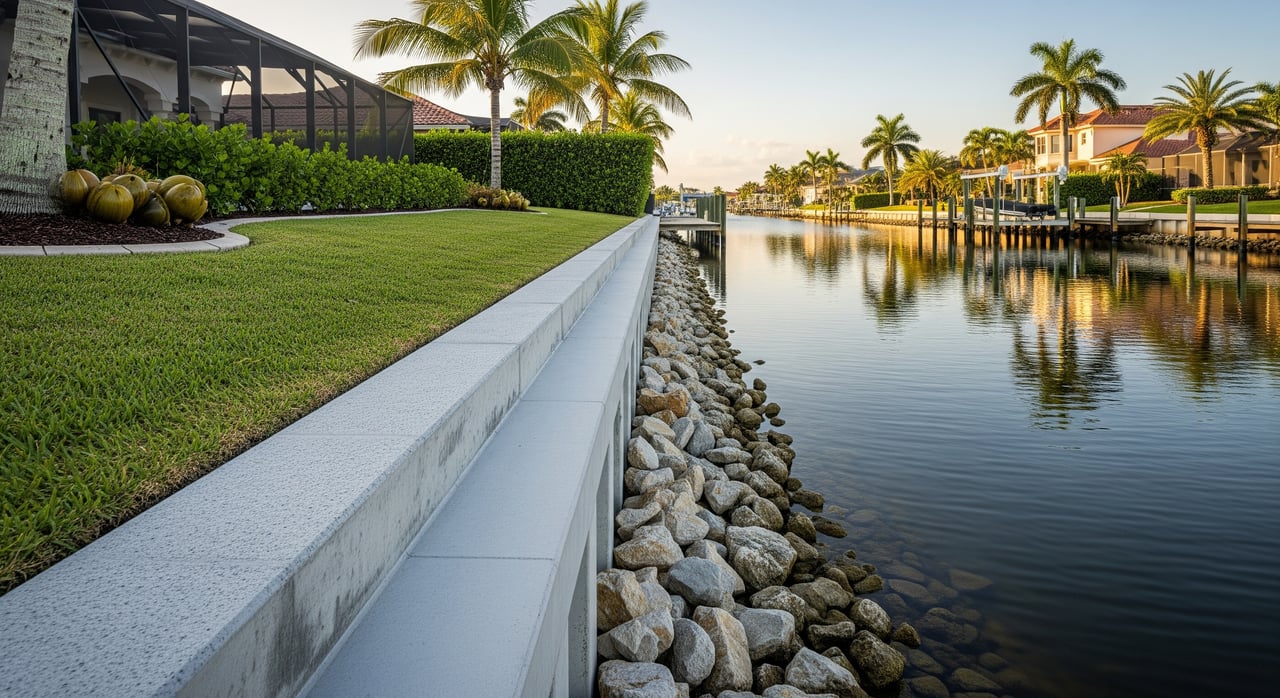
Punta Gorda Isles sits on saltwater canals that connect to Charlotte Harbor. Your seawall holds back the soil, supports patios and pools, and protects your lot from erosion. In this setting, tidal changes, boat traffic, and occasional storm surge increase wear compared to freshwater areas.
Regional sea level has been rising over time, which adds loading and overtopping risk. Major storms can also accelerate undermining at the base of the wall. Both trends shorten practical service life and can lift future costs.
Ownership usually rests with the homeowner in canal communities, but always verify your deed, HOA rules, and any maintenance agreements before you budget.
Common seawall materials and lifespans
Different materials perform differently in saltwater canals. Lifespan depends on installation quality, soil, drainage, corrosion protection, and maintenance.
Concrete
- Strengths: durable, impact resistant, long service when well built.
- Risks: cracking, spalling, and rebar corrosion if drainage is poor.
- Typical life: about 30 to 60 years or more with quality construction and care.
Steel sheet piling
- Strengths: high strength, can reach deeper soils.
- Risks: corrosion in saltwater without coatings or cathodic protection.
- Typical life: varies widely; decades with proper protection.
Vinyl (PVC) sheet piling
- Strengths: corrosion resistant and lower maintenance.
- Risks: can deform under heavy loads or impact.
- Typical life: often 25 to 50 years depending on stress and sun exposure.
Timber
- Strengths: lower initial cost.
- Risks: marine borers and rot reduce life in saltwater.
- Typical life: often 10 to 30 years; many communities now avoid timber for primary walls.
Composite or hybrid systems
- These combine materials to improve durability. Performance and life vary by design.
Signs to watch: inspection checkpoints
Plan a quick visual check each year and after major storms. During a purchase, add a full marine assessment.
- Top cap and coping: cracks, spalls, open joints, or settled sections.
- Wall face: bulging, leaning, new cracks, patchwork that suggests repeat issues.
- Joints and seams: separation or failed sealant between panels.
- Tiebacks and anchors: visible corrosion or missing hardware where accessible.
- Toe and underwater zone: scour at the base, gaps, or exposed foundations. Boat access or a diver helps.
- Drainage: missing weep holes, concentrated discharge, or backfill erosion.
- Adjoining structures: docks, lifts, and neighboring walls can show stress transfer.
- Nearby soil and hardscape: slumping lawn, sinkholes, or new cracks in patios and driveways.
Red flags that need action now
- Sudden or progressive leaning or rotation.
- Exposed or broken reinforcement or tiebacks.
- Noticeable toe exposure or visible undermining.
- Active leaks or washouts behind the wall.
- Many patches in the same area over time.
What does maintenance cost in PGI?
Seawall work is priced per linear foot, but the actual total depends on access, length, materials, toe conditions, and permits. Waterborne access, barge time, dewatering, and staging can add meaningful cost. Small projects often have higher per‑foot pricing because mobilization is the same no matter the length.
- Repairs: localized patching, cap work, or spot anchor replacement often run from the tens to a few hundreds of dollars per linear foot, based on scope and hidden conditions.
- Full replacement: recent Florida canal projects commonly fall in the range of about 600 to 1,200 dollars per linear foot, with bids above or below that band depending on materials, depth, rock toe needs, and access.
Extra cost drivers include deep sheet piling, rock toe stabilization, disposal of old treated timber, and any environmental mitigation. Labor markets, material supply, and seasonal demand in Florida can push bids higher, so always confirm with multiple local marine contractors.
Budget smart: short, medium, and long term
A simple plan helps you avoid surprises and protect resale value.
- Short term, yearly: set aside funds for inspections and small maintenance. Address drainage issues quickly to reduce pressure behind the wall.
- Medium term, 5 to 15 years: plan for spot repairs, joint resealing, tieback work, and possible toe stabilization.
- Long term, end of life: model a full replacement budget using your wall length and a realistic per‑foot range. Add a contingency of 10 to 30 percent for underwater unknowns.
Helpful steps:
- Get a condition assessment with photos and a written summary of immediate versus long‑term needs.
- Prioritize safety and function repairs first, then plan deferred items.
- If replacement may be needed within 5 to 10 years, obtain 2 to 3 bids and an engineering scope to refine costs and timelines.
- Confirm permit timelines and any seasonal work windows before you set closing or construction dates.
Permits, flood zones, and timing
Work on seawalls in Punta Gorda Isles typically requires Charlotte County permits. Some projects may also trigger review by Florida environmental agencies depending on scope and location. Requirements differ for repairs versus full replacement, and for proximity to public waterways or protected resources.
Check your FEMA Flood Insurance Rate Map designation for 33950. Flood zone and elevation can affect insurance, dock and lift design, and permit decisions. A seawall does not replace floodproofing measures and does not guarantee lower flood insurance premiums.
Start permit conversations early. Lead times can impact closing schedules and contractor availability.
Due diligence with a marine consultant
Canal seawalls have underwater and geotechnical components that a general home inspection will not catch. A marine construction consultant or licensed engineer can estimate remaining life, identify hidden risks, and outline realistic cost scenarios.
Typical scope during a transaction includes shore‑side inspection with photos, sounding to check for delamination, limited underwater review if needed, and a written report that ranks issues by urgency. You should expect preliminary cost opinions for repairs versus replacement, plus next steps like geotechnical borings or full engineering if conditions warrant.
That report supports negotiations, helps lenders and appraisers understand the condition, and shortens bid and permit timelines if work is required. In 33950, that can be the difference between a smooth closing and a last‑minute delay.
Buyer and seller tips in PGI
- Order a dedicated seawall assessment during inspections. Do not rely on a generalist alone.
- Ask the seller for prior repair invoices, engineer reports, and permit records.
- If a consultant flags toe scour or tieback corrosion, plan for follow‑up engineering or set escrow accordingly.
- Get at least two bids from licensed marine contractors and check references for local canal work.
- Build timing around permits and seasonal work conditions.
Let’s make your decision easier
Waterfront living in Punta Gorda Isles should feel exciting, not uncertain. If you want clear answers on seawall condition, realistic costs, and smart next steps, connect with a local advisor who blends lifestyle with marine‑technical expertise. Reach out to Tamina Aratari to schedule a consultation and get a seawall strategy that protects your purchase or sale.
FAQs
What is the average cost to replace a seawall in Punta Gorda Isles?
- Many Florida canal replacements fall around 600 to 1,200 dollars per linear foot, but actual bids vary with material, access, depth, toe work, and permits.
How often should I inspect a seawall in 33950?
- Do a quick visual check yearly and after major storms, and get a documented marine assessment during a home purchase or before listing.
Who is responsible for seawall maintenance in PGI?
- The seawalls are owned and maintained by the City Of Punta Gorda
- In most canal communities the homeowner is responsible, but always verify the deed, HOA covenants, and any community agreements.
Does a seawall lower flood insurance in Charlotte County?
- A seawall helps control erosion but does not substitute for floodproofing and does not guarantee lower flood insurance rates.
How long do concrete and vinyl seawalls last in saltwater canals?
- Concrete commonly lasts about 30 to 60 years with proper construction and care, while vinyl often ranges from about 25 to 50 years depending on loading and exposure.
What permits are needed to repair or replace a seawall in PGI?
- Expect Charlotte County permits and, for some scopes, state environmental review. Requirements differ for repairs versus full replacement.
Can I close on a home with a failing seawall?
- It depends on lender and insurer requirements. A consultant’s report with cost opinions can support price adjustments, escrow, or seller remediation before closing.